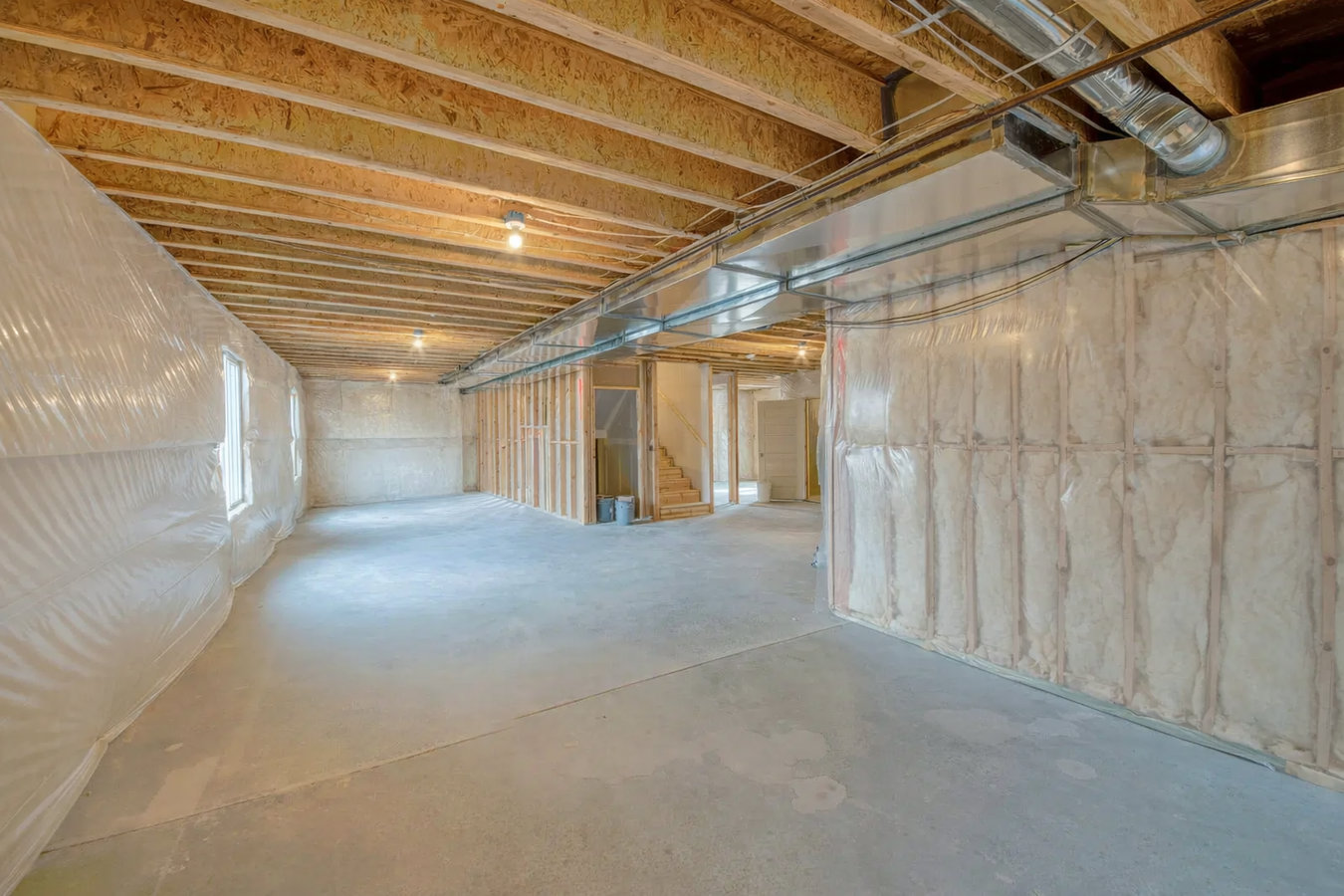
An uninsulated basement lets Longview's summer heat push up through your floors and drive your cooling bills higher every month. Proper insulation puts a barrier between your living space and that constant heat and moisture from below.
Basement insulation in Longview, TX creates a thermal barrier between your living space and the heat, cold, and moisture that enter through your foundation walls and floor - most jobs are completed in one to two days, with no need to leave your home during installation.
If your basement has bare concrete walls or exposed floor joists, that space is actively working against your air conditioner every summer. Longview's hot, humid climate means your cooling system already runs hard from May through September - an uninsulated basement makes that job harder and more expensive. Homes in established Longview neighborhoods built during the 1950s through 1980s are especially likely to have little or no basement insulation.
For homes dealing with both insulation gaps and moisture concerns, our closed-cell foam insulation service addresses both in a single application, sealing air gaps and acting as a vapor barrier at the same time.
If your first-floor floors feel noticeably warm underfoot during Longview's long summers while your AC runs, heat is rising from an uninsulated or under-insulated basement. Your cooling system is fighting heat coming up from below, which is why the room never quite reaches your set temperature.
A persistent musty odor in your basement signals moisture is present. In Longview's humid climate, basements without insulation and air sealing are prone to condensation on cool concrete walls when warm outdoor air moves in. Moisture behind insulation can lead to mold if the root cause is not addressed first.
If your electric bill spikes sharply each summer and you have not added new appliances or changed your habits, your basement may be contributing. An uninsulated basement ceiling allows cooled air to escape into unconditioned space, forcing your system to run longer to maintain temperature.
Look at your basement walls and the underside of your first floor. Bare concrete block, exposed framing, or old insulation that is falling down or discolored means the insulation is either absent or failing. Insulation that has gotten wet - common in East Texas basements - loses most of its effectiveness even if still physically present.
We insulate both basement walls and the basement ceiling depending on what your home needs. Wall insulation - applied to the interior face of your concrete or block foundation walls - works best when you want to bring the basement into your conditioned space, making it comfortable year-round for living, storage, or finished rooms. Ceiling insulation - applied to the underside of your first floor - is the right approach for unfinished basements you plan to leave unconditioned, keeping the heat and cold of that space from affecting the floors above.
Every basement insulation job starts with a moisture check. East Texas clay soil expands and contracts with seasonal moisture changes, which puts ongoing pressure on foundation walls and can open small cracks over time. We will flag any water intrusion concerns before installation begins. We also pair basement work with crawl space insulation for homes that have both - two problem areas addressed together for maximum comfort and efficiency.
Best for finished or finishing basements where you want to condition the space and make it livable year-round.
Best for unfinished basements left unconditioned - keeps cold and heat in the basement from affecting the floors above.
Addresses the framing at the top of your foundation wall - a common source of drafts and heat loss in older homes.
Ideal when moisture control is a priority alongside insulation - seals gaps and resists vapor in a single application.
Longview's summers are long and humid, with temperatures regularly climbing into the mid-90s from June through September. Your air conditioner runs hard for months, and an uninsulated basement ceiling lets cooled air escape into that unconditioned space below - forcing your system to work longer just to hold a comfortable temperature. The heavy clay soils common throughout Gregg County also create real moisture pressure on basement walls. That soil expands when wet and contracts when dry, which can open small cracks over time and let moisture work its way in. Insulating before addressing those moisture pathways only traps the problem. We check for both before any work begins.
Many of the homes we work on in areas like Kilgore and Henderson were built in the 1950s through the 1980s, when energy efficiency requirements were far lower than they are today. Homes from that era often have little or no basement insulation, and whatever was originally installed has frequently degraded. If your home is more than 30 years old, the basement is one of the most likely sources of energy loss in the house.
The U.S. Department of Energy recommends insulating both basement walls and the rim joist to minimize heat loss and reduce the moisture risk common in hot-humid climates like East Texas.
We respond within 1 business day. A short conversation helps us understand whether your basement is finished or unfinished and what problems you are trying to solve. No commitment required.
We walk through your basement, check walls, ceiling, and existing insulation, and look for any moisture concerns. You get a written quote before we schedule anything - no surprises.
Before installation day, move stored items away from the walls and surfaces being worked on. You can stay in your home during the job - just plan to keep the basement off-limits for the day.
The crew seals gaps first, then installs insulation. Most jobs wrap up in one to two days. Before leaving, we walk you through the finished work so you can see every surface was covered and there are no bare spots.
Free estimate, written quote, no obligation. We respond within 1 business day.
(430) 267-1839Every job begins with a written estimate that lists what will be done, which materials will be used, and the total cost. You know exactly what you are paying for before anyone picks up a tool.
We inspect for water intrusion and moisture issues during the assessment visit - not after installation. In Longview's clay-soil environment, that step protects you from a far more expensive problem down the road.
We work across Longview and the surrounding region, including Gregg County and neighboring areas. Local contractors who know the climate and housing stock here do better work than out-of-town crews reading a manual.
Most of the basements we insulate are in homes built between the 1950s and 1980s - the dominant age range in Longview's established neighborhoods. We know what to expect and how to work with what is already there.
Every basement insulation job we do comes with a final walkthrough so you can see the finished work before the crew leaves. That transparency is how we build the kind of trust that gets us referrals across East Texas.
The ENERGY STAR Seal and Insulate program provides guidance on basement insulation best practices and information on potential federal tax credits for qualifying improvements.
Closed-cell foam provides a dense, moisture-resistant layer on basement walls - combining insulation and vapor control in a single application.
Learn moreIf your home has a crawl space rather than a full basement, dedicated crawl space insulation addresses the same heat and moisture challenges.
Learn moreCooling season books fast across East Texas - call today or submit a request and we will respond within 1 business day.