Longview's long summers and persistent humidity push through every gap in your home's shell. Closed-cell foam seals those gaps and blocks moisture vapor in one application - cutting your cooling load and protecting your home from the inside out.
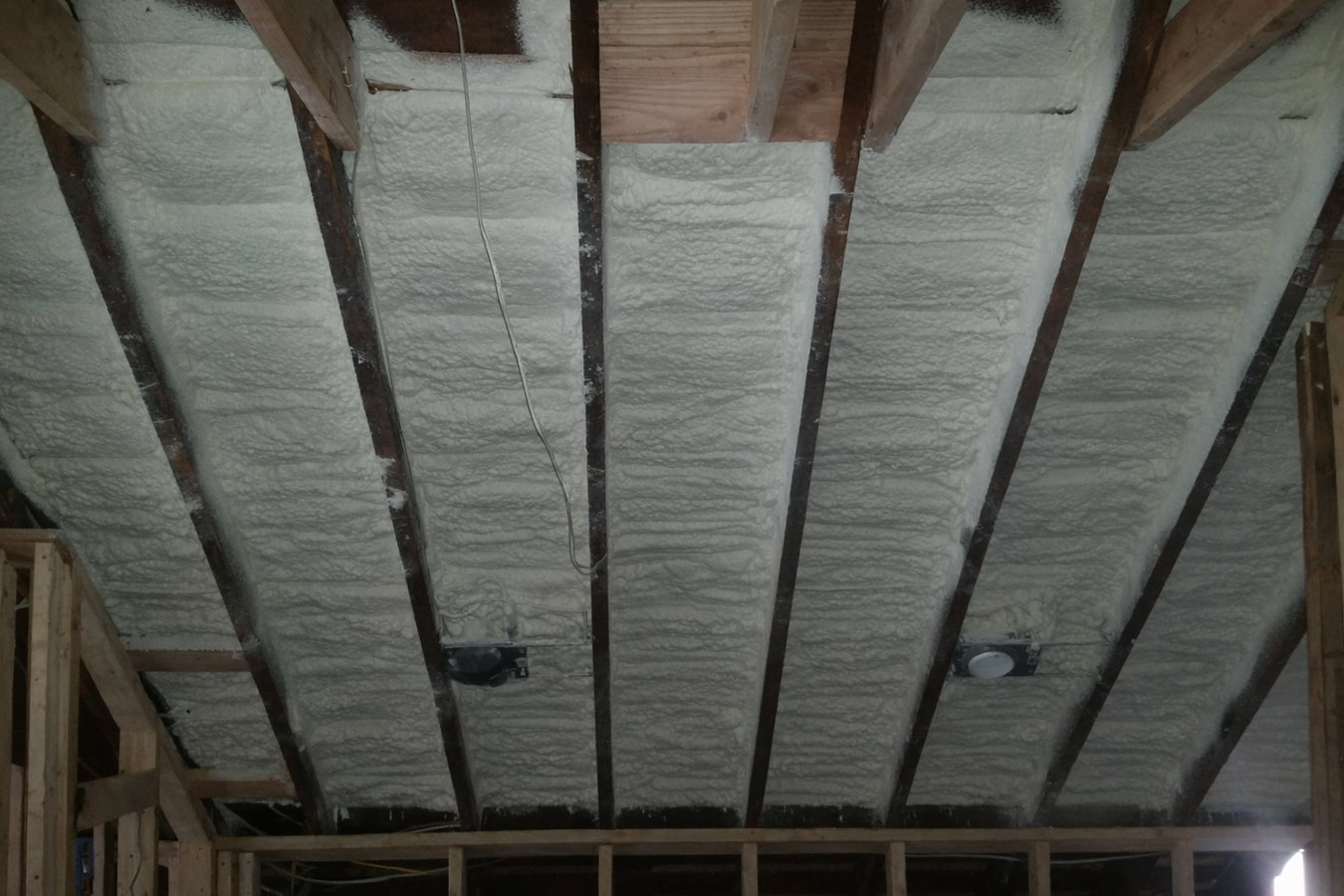
Closed-cell foam insulation in Longview, TX expands on contact into a dense, rigid barrier that insulates, seals air leaks, and resists moisture vapor all at once - most residential jobs are completed in a single day, with a 24-hour re-entry window after application.
Unlike fiberglass batts, which slow heat movement but let air and moisture pass through freely, closed-cell foam bonds to the surface and creates a continuous seal. That makes it especially valuable in Longview's climate, where your air conditioner runs for months and East Texas humidity is always working its way in through gaps around outlets, rim joists, and the floor system. Homes built before the mid-1980s - which account for a large share of Longview's housing stock - commonly have exactly the kinds of gaps closed-cell foam is designed to address.
For homeowners weighing options, our open-cell foam insulation service offers a lower-cost alternative for interior walls and attic floors where moisture resistance is a lower priority.
If your cooling costs climb sharply in June and hold there through September, your home is losing the battle against Longview's heat. A well-insulated home holds conditioned air much longer - if your system seems to run almost constantly even at a reasonable thermostat setting, air leaks and under-insulation are likely the cause.
If one bedroom or the back of the house always feels warmer and stickier than the rest of the home, that points to insulation gaps or air leaks. In Longview's climate, uneven temperatures from room to room almost always mean outside air is getting in somewhere it should not be.
Hold your hand near an electrical outlet on an exterior wall on a hot summer day. If you feel warm air coming through, that wall has air leaks. The same test works around window frames, the pull-down attic stair, and any spot where pipes or wires enter from outside. These are exactly the kinds of gaps closed-cell foam seals.
Pier-and-beam homes in older Longview neighborhoods are prone to moisture problems below the floor, which show up as a musty smell inside the house or floors that feel slightly soft underfoot. These are signs that moisture is moving freely through the floor system - closed-cell foam applied to the crawl space can stop it.
We apply closed-cell foam in attics, crawl spaces, rim joists, exterior walls, and basement walls - anywhere that moisture or air infiltration is a concern alongside thermal performance. Closed-cell foam delivers roughly R-6 to R-7 per inch of thickness, which is significantly higher than fiberglass or blown-in materials. That means you can achieve the target insulation value with a thinner application, which matters in tight spaces like rim joists and crawl space walls. In Longview's pier-and-beam homes, applying closed-cell foam to the crawl space floor joists and walls stops moisture vapor from rising into the floor system - a persistent problem given the area's clay soil and high summer humidity.
Many homeowners pair closed-cell crawl space work with a broader spray foam insulation project that addresses the attic at the same time - sealing both the top and the bottom of the home in one visit for maximum efficiency gains.
Best for pier-and-beam homes in Longview where moisture vapor from below is a recurring problem.
Best for homes with vented attics that are being converted to conditioned space, or where high R-value in a thin layer is needed.
Best for older homes where the framing at the top of the foundation wall is a known source of drafts and heat loss.
Best for new construction or full renovations where walls are open and maximum air sealing is the goal.
Longview sits in East Texas, where summer heat and high humidity arrive early and hold on through September. Your air conditioner carries that load for months, and every gap in your home's shell costs you money. Closed-cell foam is one of the few insulation materials that addresses both the thermal barrier and the moisture barrier problem at once - which is why it tends to deliver more noticeable results in hot-humid climates than in drier parts of the country. The heavy clay soil common throughout Gregg County also creates moisture pressure on foundation walls and crawl space floors that traditional insulation materials simply are not designed to handle.
A large share of the homes we work on in areas like Texarkana and Tyler were built in the 1960s through the 1980s - an era when insulation standards were far below what they are today, and spray foam did not exist as a residential option. Those homes have gaps around rim joists, thin attic insulation, and crawl space floors with no barrier at all. Closed-cell foam can address all three areas and deliver performance those homes were never designed to have.
The Spray Polyurethane Foam Alliance (SPFA) provides installation standards and contractor training guidelines for closed-cell foam applications. Qualified homeowners may also be eligible for a federal tax credit - see the IRS Energy Efficient Home Improvement Credit for current eligibility details.
We respond within 1 business day. A short conversation about your home's age, problem areas, and goals helps us arrive at the estimate visit prepared. No commitment required to ask questions.
We walk through the attic, crawl space, or walls you want treated, check for moisture or existing damage, and give you a written itemized quote. You know the full cost before committing to anything.
Before installation day, clear stored items away from the areas being treated. Plan to be out of the treated space during spraying - fumes are active while the foam cures. Most homeowners can remain in other parts of the house.
The crew applies foam in even passes and the material hardens within seconds. Most residential jobs finish in a single day. Your contractor will confirm the re-entry window - typically 24 hours - and walk you through the finished work before leaving.
Free estimate, written quote, no obligation. We respond within 1 business day.
(430) 267-1839You receive a written estimate that lists what areas will be treated, what materials will be used, and the total cost - before anyone starts work. No vague ballpark numbers and no surprise invoices.
In Longview, some closed-cell foam projects require a city building permit. We know which projects trigger that requirement and handle the paperwork. A permitted job gets a city inspection - that is a benefit to you, not a burden.
We work across Longview and the surrounding region. Local contractors who know Gregg County's clay soil, housing stock age, and humidity patterns do better work than crews who are new to the area.
Most Longview homeowners call in late spring after their first high electric bill. Scheduling in March or April gives you more flexibility and often better availability - summer books fast across East Texas.
Every closed-cell foam job we do comes with a curing timeline, a final walkthrough, and a clear record of what was done. That transparency is what separates a contractor you can call back from one you never hear from again.
Open-cell foam offers a lower cost per square foot for interior walls and attic floors where moisture control is a secondary priority.
Learn moreCompare open-cell and closed-cell options side by side and find the right spray foam approach for your specific home and budget.
Learn moreScheduling fills up fast in East Texas each spring - call today or submit a request and we will respond within 1 business day.