Longview commercial buildings without proper insulation run their AC constantly and spend more than they need to every summer. The right insulation stops that cycle and keeps every part of the building comfortable.
Commercial insulation in Longview slows heat transfer through your building's walls, roof, and floor assemblies so your HVAC system runs less - most projects in a mid-size Longview building are completed in one to three days with minimal disruption to operations.
In East Texas, where summer temperatures push into the mid-90s for months and the humidity keeps moisture pressure on your building's envelope year-round, insulation does two jobs at once. It resists heat moving in from outside - which cuts the load on your cooling system. And it reduces the pathways that allow hot, humid outdoor air to reach cooler interior surfaces and condense. For older Longview commercial buildings, which make up a large share of the commercial inventory in this market, both problems are common and both have real cost consequences. The U.S. Department of Energy estimates that properly insulating a commercial building can reduce heating and cooling costs significantly - and in Longview's long cooling season, that payoff comes fast.
Business owners who need residential insulation work alongside commercial upgrades will find our spray foam insulation service covers both property types with the same installation approach and materials.
If your electricity costs jump sharply in June and stay high through September, your building is probably working too hard to stay cool. In Longview's climate, a well-insulated commercial building should maintain comfortable temperatures without the HVAC running almost constantly. If yours is running nonstop during peak heat, inadequate insulation is often the reason.
Walk through your building on a hot afternoon and check whether some rooms or areas feel noticeably warmer than others. Uneven temperatures are a classic sign that insulation is thin, missing, or damaged in certain zones. In older Longview commercial buildings from the 1960s and 1970s, this is more common than most owners expect.
If you can see light coming through gaps around electrical outlets, pipes, or where walls meet the ceiling, conditioned air is escaping through those same openings. These gaps are easy to spot during a walkthrough and are a reliable indicator that the building's insulation and air sealing both need attention.
East Texas gets significant rainfall, and Longview commercial buildings that have had roof leaks often have insulation that absorbed moisture and lost most of its effectiveness. Wet insulation does not just underperform - it can become a source of mold growth inside your walls or ceiling. If water has come in anywhere in the past few years, have the insulation in that area inspected before the next summer season.
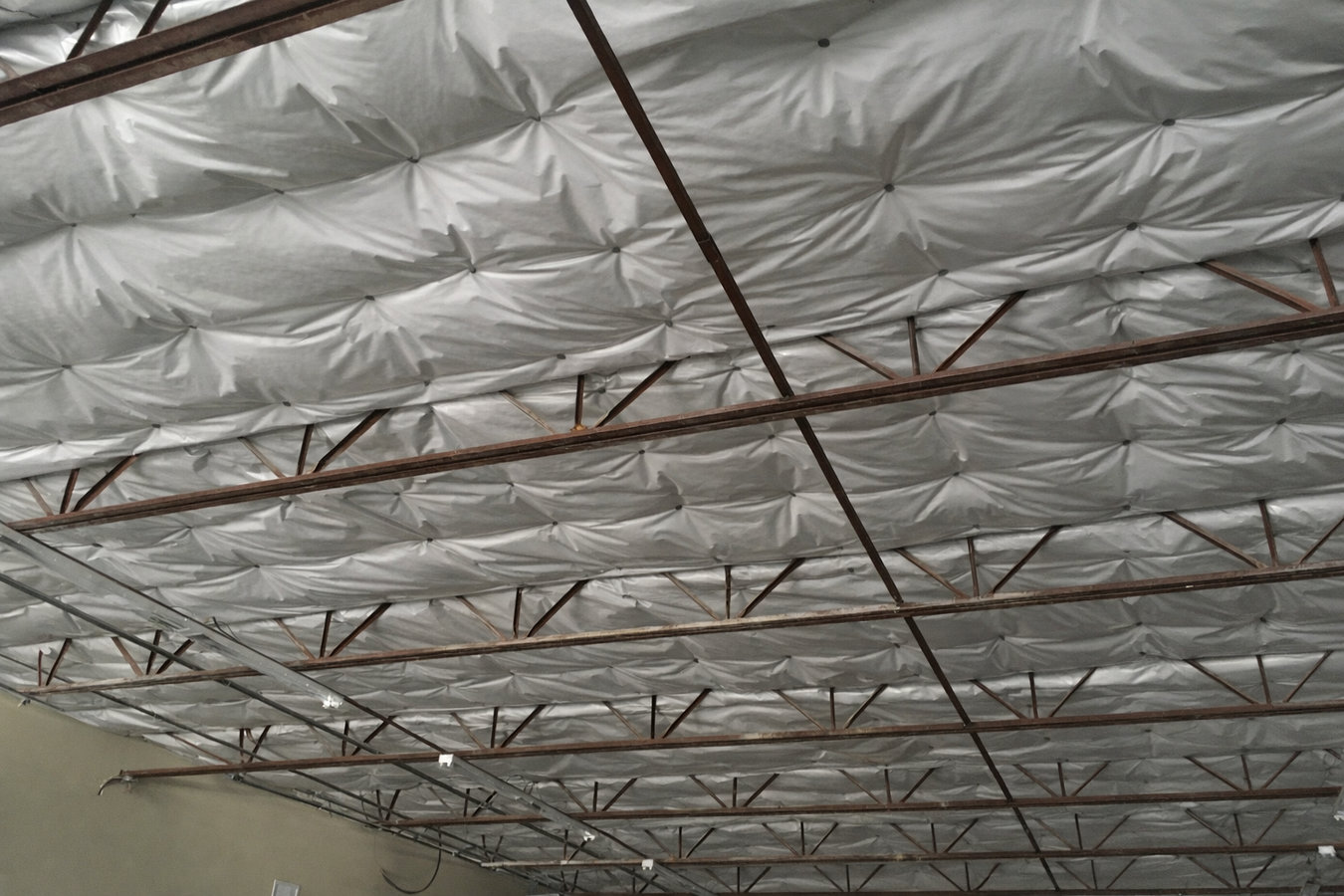
We work on commercial buildings across all of East Texas - offices, retail spaces, warehouses, light industrial facilities, and medical buildings. The right insulation approach depends on your building's construction type, age, and the specific areas that need attention. In many Longview commercial buildings, the attic and roof assembly is where the most heat is entering, and blown-in insulation or rigid foam can address that quickly. For buildings where the walls themselves are under-insulated - a common condition in 1960s and 1970s construction - spray foam or dense-pack blown-in material works well in wall cavities without requiring major demolition. Our spray foam insulation service is frequently the right fit for commercial projects that need both insulation and air sealing completed in one scope of work. For buildings where exterior wall performance is the primary issue, wall insulation targets that zone directly.
Before we recommend anything, we walk your building and look at the areas where heat and moisture are most likely to be getting through. We use that assessment to write a proposal that is specific to your building - not a standard package that may or may not address your actual problem. A written scope of work before any commitment is standard practice on every job.
Addresses the biggest heat entry point in most Longview commercial buildings - blown-in or rigid foam installed in accessible attic and ceiling spaces.
Best for buildings where wall cavities need both insulation and air sealing - especially effective in older construction with significant gaps around structural elements.
A cost-effective option for upgrading wall insulation in existing commercial buildings without requiring extensive demolition or disruption to operations.
For buildings that have had roof or wall water intrusion - removes and replaces damaged material that has lost effectiveness or become a moisture and mold risk.
Longview sits in East Texas at the intersection of two conditions that make commercial insulation a high-return investment: intense summer heat and persistent humidity. Summer temperatures regularly hit the mid-90s and the heat index pushes well above 100°F for weeks at a time from June through September. The city also averages around 47 inches of rainfall annually, and the humidity stays elevated most of the year. Commercial buildings without adequate insulation fight both problems constantly - the cooling system battles incoming heat while moisture infiltration through gaps in the envelope creates risk for mold, damaged finishes, and equipment problems. Longview's commercial building inventory includes a significant number of properties from the 1960s through 1980s, constructed to standards that are now well below what is considered adequate for this climate. The North American Insulation Manufacturers Association provides guidance on commercial insulation standards that apply here.
We serve commercial clients across the region, including building owners in Marshall and Texarkana, where similar building stock and climate conditions create the same need for commercial insulation upgrades. Whether your building is a 5,000-square-foot retail space or a 50,000-square-foot warehouse, the process is the same: an honest walkthrough assessment, a written scope of work, and installation by an experienced crew.
We ask a few basic questions about your building - size, age, what is prompting the call, and what type of business you run. You do not need all the answers; just describe what you are experiencing and we guide the rest. We respond within one business day.
We walk through the building and look at the attic, roof assembly, walls, and any mechanical spaces. We check for problem spots, assess current insulation levels, and identify the areas where upgrading will have the most impact. This visit typically takes one to two hours.
After the assessment, you receive a written proposal spelling out exactly what work will be done, what materials will be used, and the total cost. Take time to compare proposals if you are getting multiple quotes - a good contractor does not pressure you to commit on the spot.
Most Longview commercial insulation work happens in attic spaces or wall cavities, not in occupied areas. The crew protects your space with drop cloths and cleans up at the end of each day. Most mid-size buildings are done in one to three days.
No obligation, no pressure - just an honest assessment of what your building needs and what it will cost, with a written proposal in hand before you decide anything.
(430) 267-1839We cover Longview and 11 surrounding communities including Marshall, Texarkana, Tyler, and Nacogdoches. Local presence matters for commercial clients - scheduling, follow-up, and accountability are all easier when your contractor is based nearby and has a reputation to protect in the same market.
Every commercial project starts with a written proposal that names the materials, describes the scope, and states the price. You should never agree to insulation work on a verbal quote - if a contractor will not put it in writing, that tells you something important. Our proposals give you the documentation you need if questions come up later.
We have insulated offices, warehouses, and retail spaces across East Texas and understand how commercial envelopes behave in this climate. You get a crew that has handled buildings like yours, a written scope, and documented work you can reference later.
We walk your building before recommending anything. In an older Longview commercial property, that assessment often reveals that one zone is the primary problem - not the whole building. We tell you what we actually find, recommend what will have the most impact, and let you decide. The goal is a result you can measure on your utility bill.
Commercial insulation is a practical investment with a measurable return - lower utility bills, more consistent temperatures, and a building that works with your HVAC system instead of against it. Call us, and we will walk you through what we find before asking you to commit to anything.
Spray foam is commonly specified for commercial buildings in East Texas because it air-seals and insulates in one application, making it especially effective against Longview's summer heat and humidity.
Learn moreWall insulation addresses heat transfer through the exterior envelope of a building - a critical upgrade for older Longview commercial properties built with minimal or no wall insulation.
Learn moreLongview summers don't wait - lock in your project date now and start reducing cooling costs before the heat peaks and contractor schedules fill up.