Hot spots upstairs and a cooling bill that climbs every July are signs your attic has gaps that batts never filled. Blown-in insulation reaches every corner and joist cavity for complete, even coverage that makes a real difference.
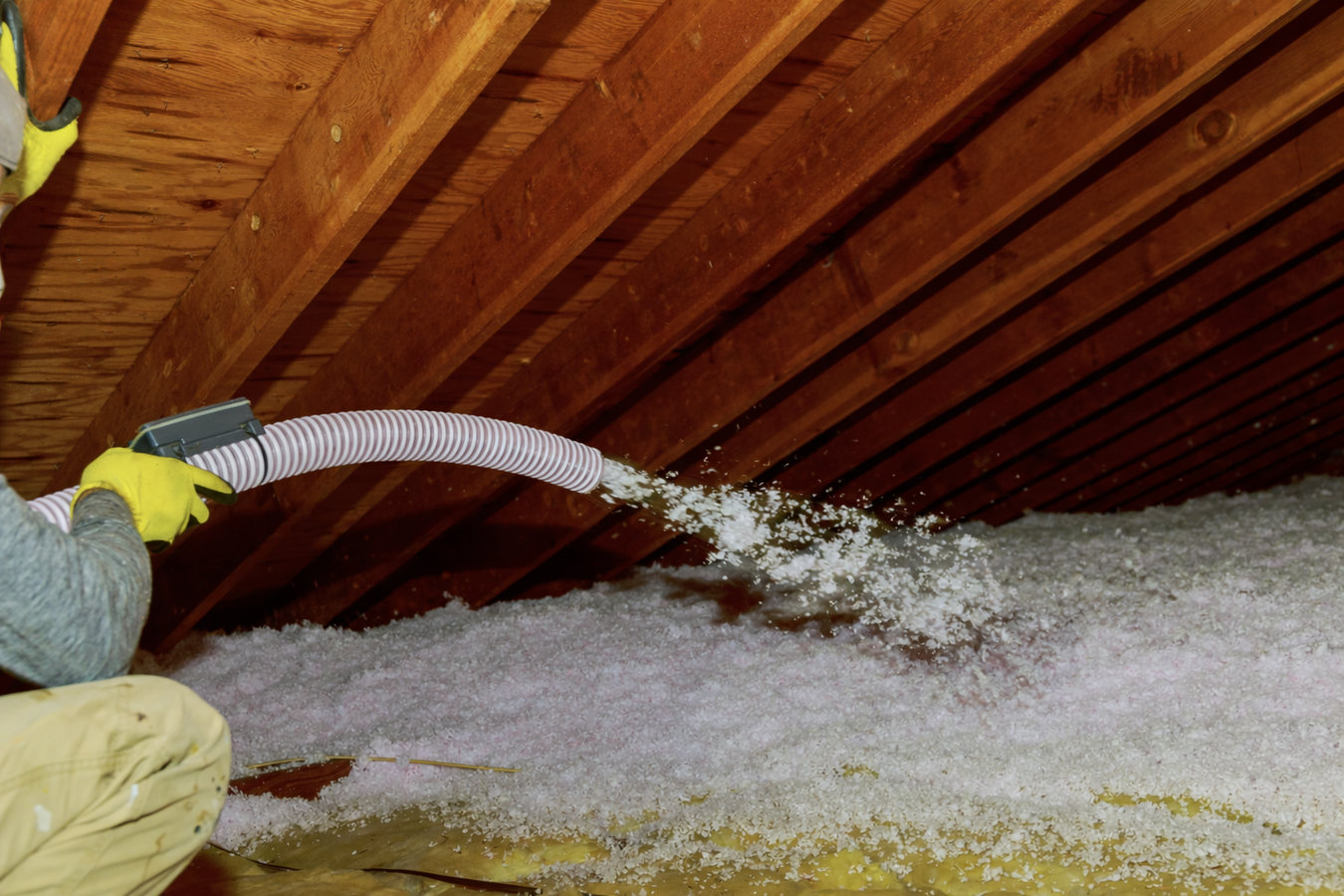
Blown-in insulation in Longview is loose fiberglass or cellulose material that a crew blows into your attic using a large hose and a truck-mounted machine - most standard attic jobs finish in three to five hours, start to finish. Unlike batt rolls, it flows around joists, wiring, and tight corners to form a continuous thermal barrier with no gaps.
If your home was built before 1990 - which covers a large share of Longview properties - the original insulation was likely installed to standards well below what East Texas summers demand today. The result is an attic that holds heat all afternoon and pushes it down into your living spaces, forcing your AC to run nonstop from May through September. Blown in insulation is one of the fastest ways to close that gap without tearing anything apart.
For best results, most contractors pair blown-in insulation with air sealing - which closes the gaps around light fixtures and plumbing penetrations. Our attic insulation service covers both in one visit, which is the combination that delivers the most noticeable improvement in comfort.
If your second floor or rooms directly under the roof feel noticeably warmer than the rest of the house even with the AC running, your attic insulation is not doing its job. Longview summers regularly push above 95 degrees F, and a thin attic layer acts like a heat lamp over your ceiling from mid-morning until well after sunset. Increasing depth and coverage is usually the fix.
If your AEP Texas or Longview Power and Light bill climbs every summer without a change in habits, inadequate insulation is one of the first things worth checking. Heat pushing through a thin attic forces your AC into longer and longer cycles - and you pay for every extra minute it runs. A quick attic measurement can confirm whether depth is the culprit.
If you open your attic hatch and clearly see the wooden beams running across the floor, your insulation is almost certainly too thin. Those joists should be buried under a thick, even layer of material. This is especially common in Longview homes built before 1985, when the recommended depth was far lower than what the Department of Energy recommends for East Texas today.
Homes built in Longview before the early 1990s were typically insulated to standards now considered inadequate for Climate Zone 2. If you have never had an insulation assessment and your home is in that age range, there is a strong chance the attic is significantly under-insulated. A free on-site check before another summer hits costs nothing and gives you the exact picture.
We install both fiberglass and cellulose blown-in material, choosing based on your attic conditions, existing insulation depth, and moisture exposure. Fiberglass holds its depth over time and resists moisture well - a solid choice for Longview attics where summer humidity is persistent. Cellulose is made from recycled paper and provides excellent coverage in irregular spaces, though it can settle slightly over the years and benefits from a depth check every decade.
In many Longview homes, the biggest efficiency gain comes from pairing blown-in material with a full home insulation review across all zones - attic, walls, and crawl space together. We also offer complete attic insulation packages that include air sealing before the blown-in material goes in, which is the step many crews skip and the one that makes the biggest difference in long-term comfort.
Best for attics with ongoing moisture exposure or where long-term depth stability matters most.
Ideal for tight or irregular attic spaces where complete gap coverage is the top priority.
The recommended combination for older Longview homes with gap-prone attic floors and light fixtures.
Efficient option for homes that have some existing insulation but fall well short of the recommended depth.
Longview sits in Climate Zone 2 - one of the hottest and most humid climate designations in the country. Attic temperatures here can exceed 150 degrees F on a July afternoon, and that heat radiates down into living spaces for hours after the sun sets. The Department of Energy recommends an R-value between R-49 and R-60 for attics in this zone, which in practical terms means 14 to 18 inches of blown-in material. Most homes built in Longview before the 1990s have a fraction of that. The gap between what you have and what you need is why so many homeowners are running their AC nonstop all summer.
East Texas also averages over 50 inches of rainfall per year, and the persistent humidity creates a real risk for attics that are not properly ventilated alongside the insulation. We check ventilation during every assessment - adding material on top of a ventilation problem can trap moisture rather than solve it. Homeowners in Kilgore and Henderson face the same climate and the same older housing stock, and we bring the same process to every job across the region.
The U.S. Department of Energy publishes climate-zone-specific R-value recommendations confirming that homes in Longview need significantly more attic insulation than most of the country to stay comfortable and efficient year-round.
We respond within 1 business day. A brief conversation covers your home's age, square footage, and any comfort concerns you have noticed - about five minutes of your time.
We measure existing insulation depth, look for air gaps, and check attic ventilation before recommending anything. You receive a written estimate with a specific target depth so you know exactly what you are paying for.
The crew arrives with a truck-mounted blower and runs a flexible hose into your attic. Blowing typically takes one to two hours for a standard home. You stay in your house. The main disruption is the sound of the machine running outside.
We verify coverage at multiple points and leave a depth marker in your attic so you can check it yourself anytime. The total visit runs three to five hours. Your home is fully usable the moment we leave - no curing time, no waiting.
We respond within 1 business day - no obligation, no pressure. After you submit, someone from our office will call to schedule a free on-site attic assessment at a time that works for you.
(430) 267-1839We know the specific conditions here - older housing stock, high summer humidity, and attics that get extreme in July. That local experience shows up in how we assess and install, not just in where we are located.
After every blown-in job, we leave a calibrated depth ruler in your attic so you can verify coverage yourself at any time. Most crews skip this step. We include it on every job because you deserve proof, not just a promise.
Every estimate includes the target depth and material so you can compare quotes accurately and know exactly what was installed when the work is done. You get documented results, not just a promise.
Every quote specifies the target insulation depth and the material being used. Homeowners in Gregg County deserve to know exactly what they are getting - not just a single price with no details behind it.
These are not just selling points - they are the things homeowners ask about when they call us. We built our process around answering those questions before you have to ask them. The Insulation Contractors Association of America outlines industry best practices for installation quality that guide how we work on every job.
A whole-home insulation review covers every zone - attic, walls, and crawl space - so nothing is left out when updating an older Longview property.
Learn moreFull attic insulation service with air sealing included - the combination that delivers the biggest comfort and efficiency improvement in East Texas homes.
Learn moreBlown-in insulation fills the gaps your current attic is missing - call today to schedule a free estimate before the heat season books us up.